For corporate service providers, fund administrators, iGaming operators, payment firms and estate agents in Malta, onboarding a new client still means weeks of emails, incomplete files and documents checked by hand. AI can take most of that work off your team without taking the decision away from them. This guide explains what AI can safely do in KYC, what Maltese and EU rules expect, and how to start. It is general information, not legal advice.
What does KYC onboarding involve for a Maltese business?
If you are a subject person under Malta’s anti-money laundering rules, you must identify each customer and any beneficial owners, verify those details using documents, data or information from a reliable and independent source, understand the purpose of the relationship and keep monitoring it. The FIAU Implementing Procedures set out how to do this in practice, with sector-specific Part II guidance for areas such as remote gaming.
In practice, most of the time goes on the steps around the decision: asking for documents, chasing the ones that never arrive, reading passports and utility bills, matching names and addresses across them, checking expiry dates and filing everything so it can be shown to a supervisor later.
Where can AI help, and where should it not decide?
AI is strongest where the work is reading, sorting and checking. It is weakest, and riskiest, where the work is judgement about risk.
Good jobs for AI
- Document collection: a secure client portal that asks for exactly the documents each client type needs and sends reminders automatically.
- Reading and sorting: recognising passports, ID cards, proof of address, company extracts and bank letters, and filing each in the right place.
- Extraction and matching: pulling out names, dates of birth, addresses and expiry dates, and flagging where they do not match across documents.
- Completeness checks: telling your team what is missing, expired or older than your policy allows before anyone starts a review.
- Screening hand-off: sending names to the sanctions and politically exposed person screening service you already use, and attaching the results to the file.
- Record keeping: logging every document, check and decision with dates and names, ready for inspection.
Jobs that should stay with a person
- Deciding the customer’s risk rating where judgement is needed.
- Approving, rejecting or exiting a client.
- Assessing source of funds and source of wealth explanations.
- Deciding whether something is suspicious and whether to report it.
This split is not only good practice. Under the GDPR, people have the right not to be subject to a decision based solely on automated processing that significantly affects them, unless specific safeguards apply. Keeping a named person on every approval avoids that problem and keeps accountability clear.
What changes with the EU AML Regulation in July 2027?
The Anti-Money Laundering Regulation (EU) 2024/1624 applies from 10 July 2027. Because it is a regulation rather than a directive, its customer due diligence rules apply directly in every member state, replacing much of the detail that currently differs from country to country.
Alongside it, the EU’s new Anti-Money Laundering Authority (AMLA), based in Frankfurt, is preparing to directly supervise around 40 high-risk cross-border financial groups from 2028. Most Maltese firms will remain supervised locally, but supervisory expectations across the EU are converging.
For onboarding, the practical message is simple: processes that are documented, consistent and easy to evidence will be easier to adapt in 2027. A well-built digital onboarding flow, with clear rules and a full record of every step, is a good foundation for that.
Is remote and electronic verification allowed in Malta?
Yes. Verification can rely on identification documents, on electronic means that let you confirm the customer is who they say they are, or on a combination of both, provided the source is reliable and independent. The FIAU has also drawn subject persons’ attention to the EBA Guidelines on remote customer onboarding, which cover how to choose, test and monitor remote onboarding technology.
Electronic identity is also becoming more common. Under the revised eIDAS rules, every EU member state must offer citizens and residents a European Digital Identity Wallet by the end of 2026. Onboarding systems built today should be able to accept wallet-based identity alongside documents as it becomes available.
What does the EU AI Act mean for AI in KYC?
Most AI used in onboarding is not high-risk under the AI Act. Annex III excludes biometric verification whose sole purpose is to confirm that a person is who they claim to be, such as a selfie matched against their own passport. Remote biometric identification, which searches a database of many people to identify someone unknown, is a different matter and is high-risk.
Credit scoring of individuals is high-risk, but AI used to detect financial fraud is excluded from that category. If your onboarding feeds into lending decisions about people, take advice on where your system falls. Our guide to what the EU AI Act now requires of Maltese SMEs explains the timeline, including the high-risk rules that now apply from 2 December 2027.
What does a good AI-assisted onboarding flow look like?
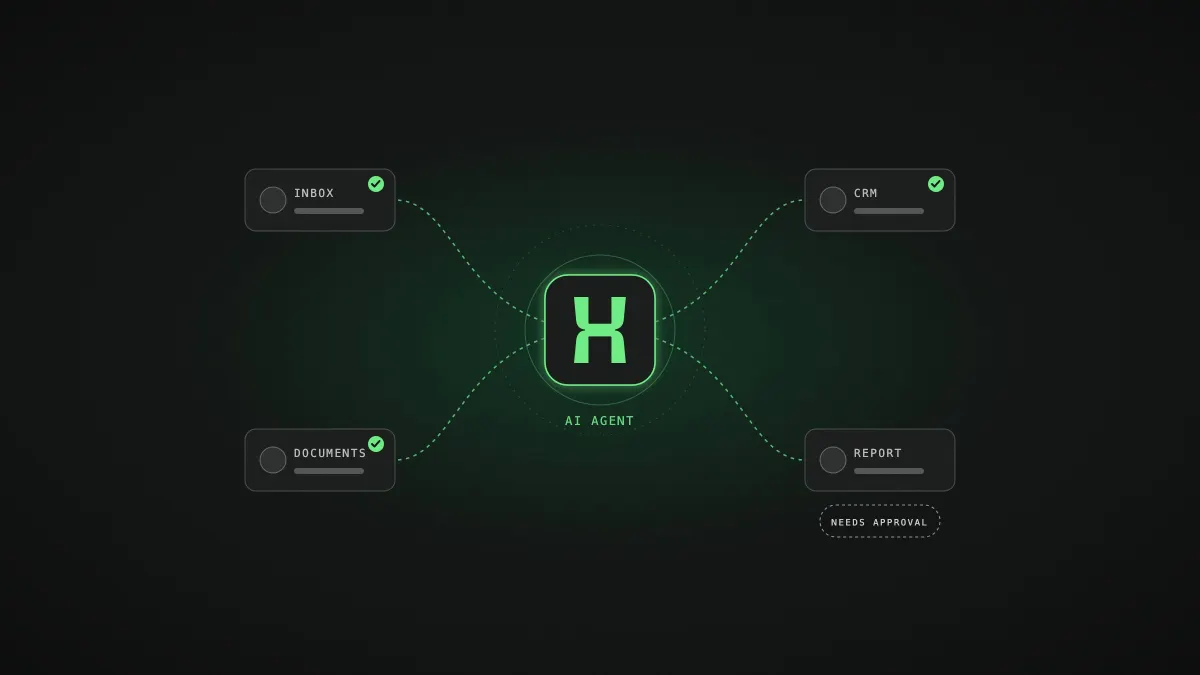
- Client portal: the client receives a secure, branded link and answers questions that adapt to whether they are an individual, a company or a trust.
- Document upload: the client uploads documents from a phone or computer. AI recognises each one and files it.
- Automatic checks: names, dates and addresses are extracted and compared, expiry dates are checked and gaps are listed.
- Chasers: missing or expired items trigger reminders without anyone writing an email.
- Screening: names go to your sanctions and PEP screening provider, with results attached to the file.
- Human review: your compliance team opens a complete, organised file with every flag explained, sets the risk rating and approves or declines.
- Audit trail: every document, check, change and decision is recorded with who did it and when.
We build this kind of flow as part of our client onboarding and KYC automation, using the same document AI described in process documents with AI. It is one of several AI automation services we offer businesses in Malta.
How do you protect client data in an AI onboarding system?
- Keep storage and processing in the EU where possible, and know which AI providers process the data.
- Use AI providers whose business terms do not allow training on your clients’ data.
- Limit access by role, so only named people can open client files.
- Keep records for as long as the law requires and delete them afterwards. Under the AMLR, the standard retention period is five years after the business relationship ends.
- Test the system on real, anonymised examples before it goes live, and monitor its accuracy after launch.
How should a Maltese firm get started?
Start with one client type and one pain point, usually document collection and completeness checks, because that is where most time is lost. Measure how long a typical file takes today, run a pilot on a few weeks of new clients, then compare. Our 90-day plan for starting with AI automation walks through that approach, and our guide to AI document processing costs and payback shows how to work out whether it is worth it. Eligible businesses may also be able to part-fund the project through Malta Enterprise schemes.
Frequently asked questions
Can AI approve a new client on its own?
It should not. AI can collect, read and check documents and prepare a complete file, but the risk rating and the decision to accept or decline should rest with a named person in your compliance team.
Is remote onboarding allowed under Malta’s AML rules?
Yes. The FIAU accepts verification using documents, electronic means or both, provided the source is reliable and independent, and it points firms to the EBA Guidelines on remote customer onboarding.
When does the EU AML Regulation apply?
The Anti-Money Laundering Regulation (EU) 2024/1624 applies from 10 July 2027, bringing one directly applicable set of customer due diligence rules across the EU.
Is AI identity verification high-risk under the EU AI Act?
Biometric verification whose sole purpose is to confirm that a person is who they claim to be is excluded from the high-risk list. Identifying unknown people against a database is high-risk.
Which businesses in Malta benefit most from KYC automation?
Firms that onboard many clients with similar documents: corporate service providers, fund administrators and trustees, iGaming operators, payment and financial institutions, and estate agents.
Spending too long chasing client documents? Book a free discovery call with Haystack and we will map your onboarding process and show you where AI can save time safely.