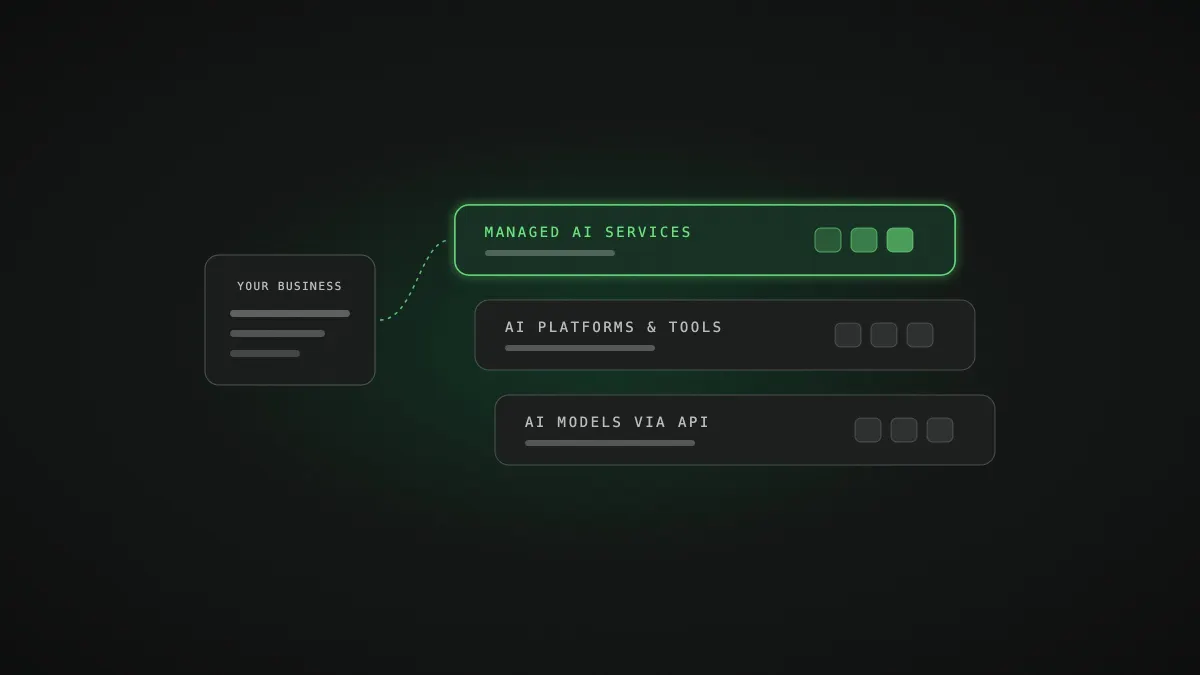
This is an opinion piece. It reflects Haystack’s view, formed from building AI and automation systems for businesses, not a neutral survey of the evidence. Our argument is simple: for most businesses, the newest AI model is not what stands between them and results. Their processes are.
How fast are AI models really changing?
Consider one provider. Anthropic released Sonnet 5 on 30 June, Opus 5 on 24 July, Fable 5.1 on 1 September, Opus 5.5 on 22 September and Sonnet 5.5 six days later. Google’s developer changelog shows Gemini 3.7 Flash on 13 August and Gemini 3.8 Flash on 2 September, plus a string of specialist voice and transcription models in between. OpenAI, Meta and Mistral have been similarly busy.
Each release is genuinely better, and often cheaper. That is good news. But it creates a temptation we see in boardrooms every week: waiting for the next model, or switching tools every time a benchmark moves, instead of doing the slower work that actually produces value.
If models are this good, why are results so patchy?
The evidence suggests capability is not the constraint. Stanford’s 2026 AI Index reports that 88% of surveyed organisations use AI in at least one business function, yet agent deployment remains in the single digits across nearly all functions. Eurostat’s survey of EU enterprises found that the most common reason for not adopting AI, among those who considered it, was a lack of relevant expertise, cited by around 71%. Neither points to models being too weak.
What we see on the ground matches that. When an AI project underperforms, the cause is almost never that the model was not clever enough. It is one of these:
- The process was never written down. Three people do the same task three different ways, and the exceptions live in someone’s head.
- The data is scattered. The information the AI needs sits across inboxes, spreadsheets and a legacy system with no API.
- Nobody owns it. The pilot was an experiment with no one responsible for turning it into how work is done.
- Success was never defined. Without a baseline, no one can say whether it worked.
A newer model fixes none of these.
Why does process design matter more than model choice?
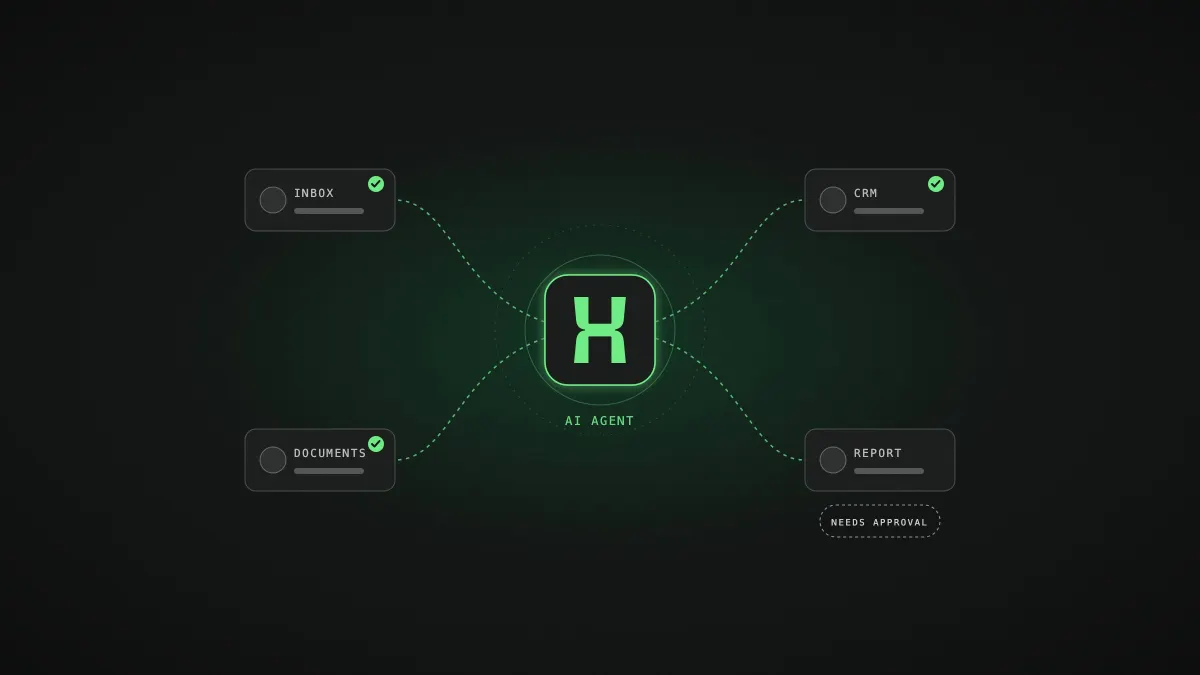
Because most business value comes from the system around the model. Take invoice processing. The model reads the invoice. But the value comes from matching it against the purchase order, applying your approval rules, posting it to the right ledger, flagging duplicates and routing exceptions to the right person. That is process design and integration, and it determines whether the automation saves hours or creates a new queue of corrections.
In our experience, a well-designed workflow on a model from six months ago usually outperforms a poorly designed one on the latest release. And a well-designed workflow gets better for free when you plug in a newer model.
The research on people points the same way. In a well-known NBER study of more than 5,000 customer support agents, an AI assistant raised productivity by 14% on average and by 34% for less experienced staff. The gain came from how the tool was fitted into daily work, surfacing good practice at the right moment, not from raw intelligence alone.
Does that mean the model does not matter?
No. Model choice matters at the margins, and sometimes a lot. A cheaper model that is good enough can turn a marginal project into a clear win. Anthropic, for instance, says Opus 5.5 costs about 40% less to run than Opus 5 on typical workloads. Better handling of long documents or tricky layouts can raise straight-through rates. Improved resistance to manipulation matters for agents that read external content.
Our point is about sequence. Get the process, the data and the ownership right first. Then choose the model on evidence, using your own test cases, and upgrade when the numbers justify it.
What should business leaders do instead?
Our recommendations, as opinion grounded in practice:
- Pick one process and map it honestly. Who does what, with which inputs, and where it waits. Include the exceptions.
- Fix the obvious waste first. Some steps should be removed, not automated.
- Connect the data the process needs. This is often the most valuable part of the work. See connecting your systems.
- Name an owner. One person accountable for the process and its results.
- Build with the model as a replaceable part. Keep a test set of real examples so you can evaluate new models in hours.
- Review quarterly, not weekly. Check whether a newer model would improve cost or accuracy on your test set. Switch if it does. Ignore the noise if it does not.
Is waiting for better AI ever the right call?
Rarely, in our view. Waiting has a cost: the manual hours you keep paying for, and the learning your competitors are doing. And the thing you would be waiting for, a better model, is the part that is easiest to upgrade later. The process and data work is what takes time, and it is useful whichever model you end up using.
The businesses that will get the most from AI over the next few years are not those with access to the best model. Everyone has that. They are those that did the unglamorous work of understanding and redesigning how they operate. That is the work behind our AI automation and workflow automation projects.
Frequently asked questions
Should we wait for the next AI model before starting a project?
In our view, no. The process design, data connections and ownership you establish now will carry over to any future model, and a well-built system can switch models with a configuration change.
How often should we review which AI model we use?
We suggest quarterly. Test candidate models against a fixed set of your own real examples and switch only when cost or accuracy improves meaningfully.
What is the most common reason AI projects fail?
In our experience it is rarely the model. It is usually an undocumented process, scattered data, no clear owner or no baseline to measure success against.
If you would rather fix the process than chase the next release, book a free discovery call with Haystack. We will start with how your work actually flows.